
IT Infrastructure & Managed Services
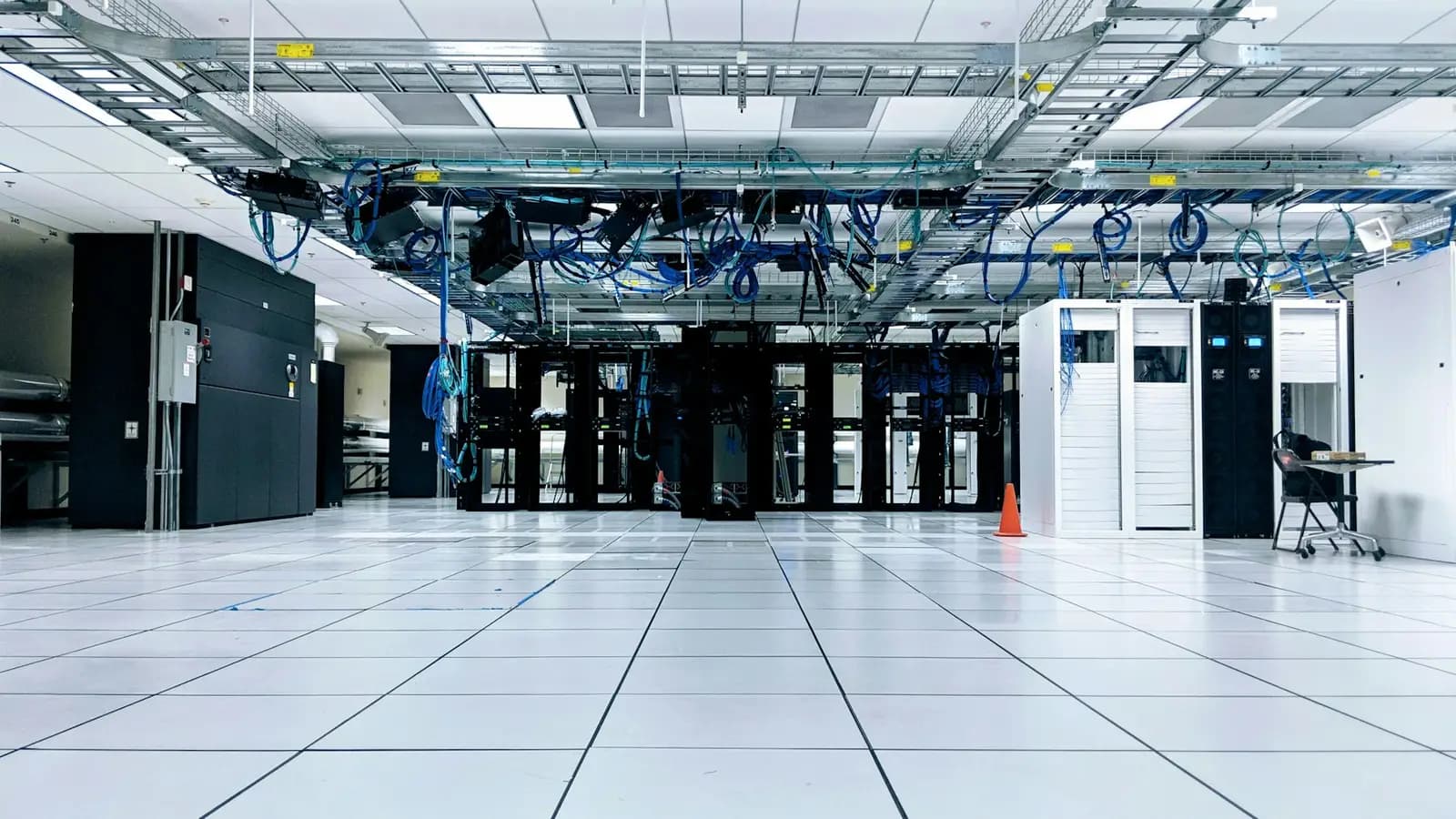
Data Centre & Hybrid Infrastructure
We design and deploy on-premise and hybrid infrastructure with leading OEMs, sized for today's workloads and ready for tomorrow's AI and data platforms.
What's included
How we help
Servers & compute
Rack, blade and high-density platforms, installed and configured with remote management.
Hyperconverged & virtualisation
Nutanix, VMware and Microsoft platforms for private cloud and VDI.
Storage
SAN, NAS and all-flash arrays with tiering and lifecycle policies.
Backup & disaster recovery
Data protection, immutable backups, DR sites and DR-as-a-Service.
AI & HPC infrastructure
GPU servers, high-throughput storage and low-latency fabrics for AI/ML and engineering teams.
Comms rooms & edge
Racks, power, cooling and monitoring for server rooms at every site.
Sizing is a memory and I/O problem, not a core count problem
Most server quotes are written around processor cores, because cores are the easiest thing to compare on a spreadsheet. In practice the first constraint a virtualisation cluster hits is almost never cores. It is memory, and after that it is storage latency.
So we size from the workload inventory rather than from a CPU catalogue: how much RAM each guest genuinely commits, what the working set looks like, and what the I/O profile is during the hour that actually matters rather than the daily average. A cluster that is comfortable at 60 percent memory on a normal Tuesday and saturates during month end close has been sized against the wrong number.
We also size for the failure case. If a three node cluster is specified so that losing one node leaves the survivors unable to carry the load, it is a cluster in name only. Capacity is quoted with a node out, which usually means the honest answer is four nodes rather than three, and we would rather have that argument before purchase than during an outage.
Hyperconverged or three tier: the decision is operational
Hyperconverged earns its place when the team running it is small, when growth is reasonably linear, and when compute and storage requirements grow together. It collapses three support relationships into one, and for a capability centre standing up with a lean infrastructure team that simplicity is worth real money.
Three tier still wins when storage and compute scale independently, which is common with large data sets, media, or an analytics platform whose capacity grows far faster than its processing. Buying compute you do not need in order to add capacity is a tax that compounds every refresh cycle.
The failure mode we see most often is hyperconverged bought for a workload that is storage heavy and compute light. It looks elegant at the design stage and becomes expensive at the third expansion. We would rather tell you that at the proposal stage than sell the tidier architecture.
What an Indian building actually gives you, and how that changes the design
This is where designs drawn up overseas most often come unstuck. A rack specified at a density that is routine in a purpose built facility can be undeliverable in a leased commercial tower, because the constraint is not the rack. It is the power the landlord will commit to that floor and the cooling the building can actually remove.
So the design starts with the site survey, not the bill of materials: the usable power per rack, whether the supply is genuinely redundant or two feeds from one failure point, the realistic generator and UPS runtime, and how much heat the room can reject on a May afternoon in Gurugram rather than on a specification sheet. Ambient conditions in much of India are unforgiving, and equipment derated by heat fails in ways that look random until someone plots the failures against outside temperature.
Where the building cannot support what the workload needs, the answer is usually to split the estate rather than to force it. Latency sensitive and regulated systems stay on site, density hungry platforms such as GPU go to colocation, and the rest moves to cloud where elasticity is worth more than control. That decision is cheap to make early and very expensive to revisit once hardware is on the floor.
Lead time is part of the architecture
A design that cannot be delivered when it is needed is not a good design. Enterprise storage and high density compute are frequently the longest lead items on a build, and a configuration assembled from parts that each add weeks can quietly push a go-live past the date the business has already committed to.
We price lead time into the decision alongside performance and cost. Where a build has to land on a fixed date, we will recommend a configuration that is held in stock over a marginally better one that is not, and say plainly what the trade-off is rather than discovering it at the point of order.
This is the practical reason we hold stock rather than quoting purely to order. It does not make us cheaper. It makes the date real.
FAQ
Data Centre & Hybrid Infrastructure: common questions
Can you work with hardware we have already bought?+
Yes. Brownfield is the normal case rather than the exception. We audit what is in place, establish what has useful life and support cover remaining, and design around it. Replacing equipment that still has three years of warranty is rarely the right answer, and a vendor who recommends it on every engagement is telling you something about their business model rather than yours.
On premise, colocation or cloud?+
Usually a mix, decided workload by workload rather than as a single policy. Latency sensitive systems and anything with a data residency obligation tend to stay close. Variable or spiky workloads suit cloud, where paying for elasticity is cheaper than owning the peak. Density hungry platforms such as GPU often make more sense in colocation than in a leased office, because the power and cooling are already there.
How long does a data centre or server room build take in India?+
The technical work is rarely what sets the date. Equipment lead times, building readiness, landlord approvals and power provisioning do. We sequence those in parallel from the start and tell you which item is on the critical path, because a build is almost always waiting on one thing rather than on everything.
Do you support the infrastructure after it is live?+
Yes, through our managed services practice, and the handover is designed from the start rather than assembled at the end. You receive build and test documentation and operational runbooks whether or not you keep us on afterwards. Infrastructure that only the people who installed it understand is a liability, and tying a client in that way is not a business we want.
Related
You may also need



Planning a GCC in India?
Talk to us about your timelines, headcount and technology needs. We'll come back with a clear plan and a single point of contact.